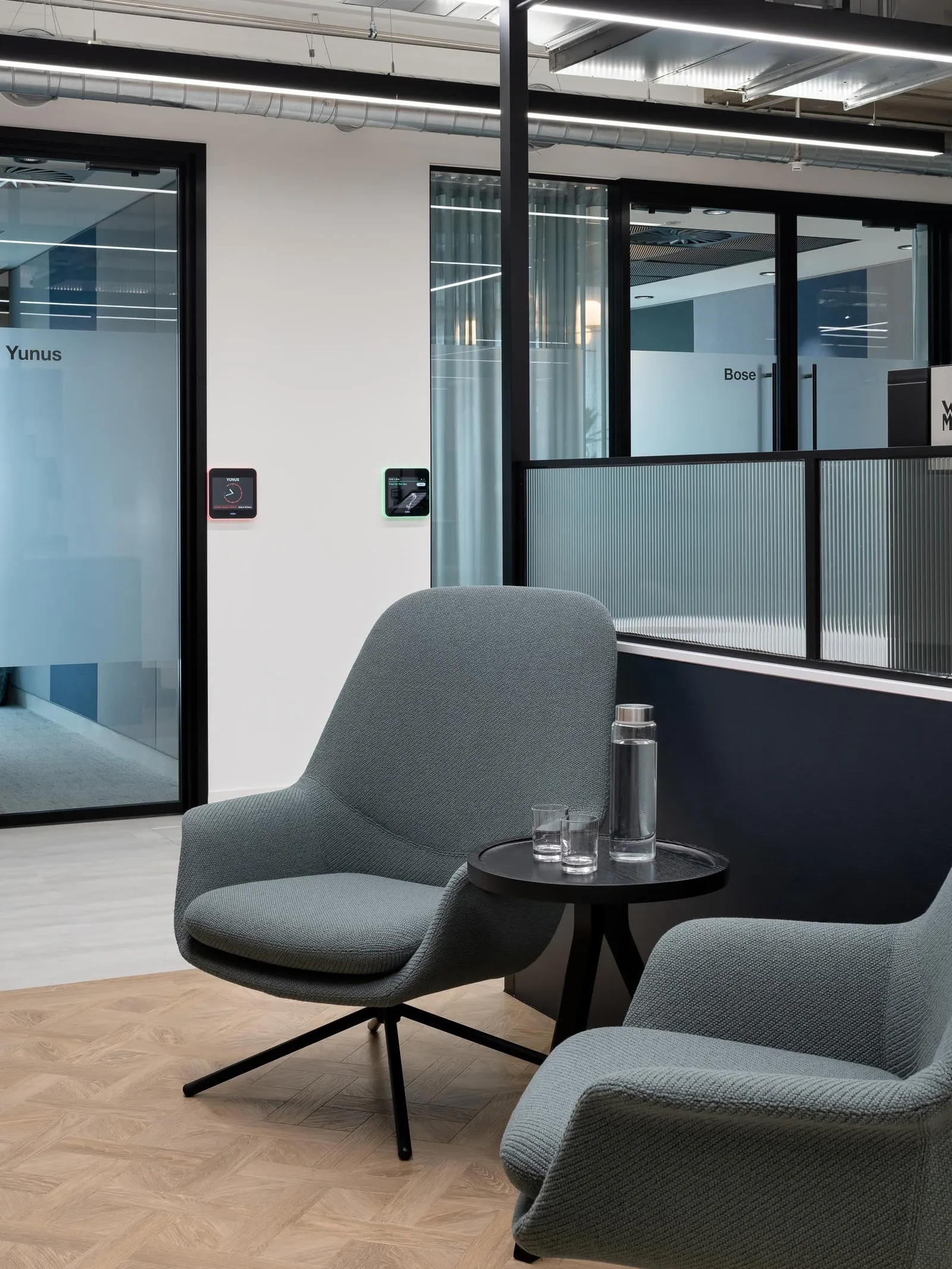
From AI-enabled discovery to sustainability-led planning, the laboratory is undergoing one of the most significant shifts in its history. Scientific environments that once changed slowly are now evolving at pace, driven by digital research, new modes of collaboration, and the increasing need for resilience in high-intensity, high-demand settings.
In 2026, laboratories will not only become more intelligent; they will become more interconnected, more adaptable, and more deeply aligned with the realities of contemporary research. The spaces that succeed will be those designed with both scientific precision and human experience in mind.
Below, we explore the key laboratory design trends for 2026, and what they mean for organisations looking to future-proof their R&D environments.

1. Flexibility in laboratory design matures: adaptability becomes a scientific asset
Flexible laboratory design has been a long-standing priority, but in 2026, the emphasis shifts from simple modularity to precision adaptability. With research cycles accelerating and disciplines converging, laboratories must evolve rapidly and often.
What this looks like:
Modular benching and casework that can be reconfigured in days rather than months
Activity-based neighbourhoods designed for wet work, analytical tasks, computational science, and collaboration
Space utilisation analytics and workflow mapping guiding real estate decisions
Laboratories planned for continuous evolution, rather than occasional refurbishment
In short, flexibility is no longer aesthetic; it is operational. The most effective labs will be the ones designed to change as quickly as the science within them.

2. AI and automation reshape laboratory workflows
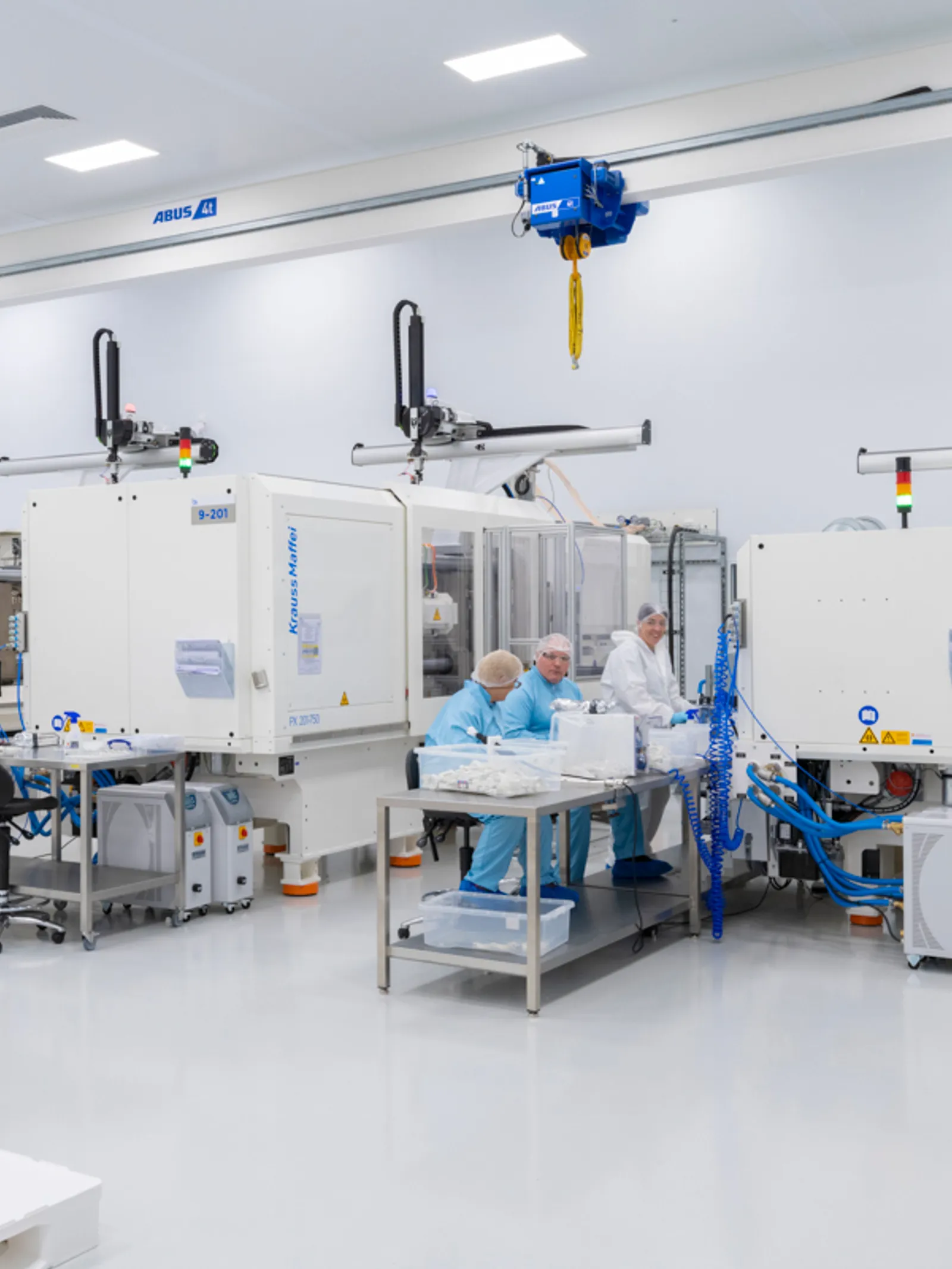
Artificial intelligence and automation continue to transform research processes, but the shift in 2026 is their deep integration into everyday scientific environments. Instead of appearing as add-ons or specialist tools, AI, robotics and computational modelling will increasingly shape how laboratories are designed and operated.
“Computational research aligned with wet labs — how do we co-locate AI development alongside traditional wet R&D?”
– Chris Stewart, Managing Director, Area Laboratories
Laboratory layouts will increasingly be expected to support the co-location of computational teams with wet lab scientists, creating hybrid environments where data science and experimental work meaningfully intersect.
Being able to take charge on this, and designing, building and maintaining a lab that is fully automated is going to ensure smoother sailing for years to come - the first step to this is ensure you understand automations full life cycle.
Expect to see:
AI-driven environmental control systems adjusting temperature, humidity and airflow
Robotic platforms enhancing reproducibility, throughput and sample integrity
Digital twins used to simulate workflows, equipment positioning and ventilation strategies
Predictive maintenance minimising downtime in mission-critical spaces
As digital science expands, the laboratory becomes an intelligent system, responsive, analytical and able to pre-empt issues before they interrupt the research cycle.
Research from the University of Pennsylvania “estimates that AI will increase productivity and GDP by 1.5% by 2035, nearly 3% by 2055, and 3.7% by 2075” - so not only will automation help smooth out processes, it will help integrate greater efficiency into the lab space.
3. Human experience and scientific culture return to the centre
After years of focusing on technical upgrades, organisations are once again prioritising the human experience of laboratory work. The physical lab environment has a profound impact on well-being, productivity and collaboration, particularly in fast-paced or high-pressure R&D settings.
In 2026, laboratory design will place renewed emphasis on:
Spaces that encourage spontaneous scientific discussion and idea sharing
Clear, predictable wayfinding and layouts designed to support neurodiverse colleagues, with over 25% of people who work in a lab identifying as Autistic in 2024 and 48.1 % of laboratory workers identifying as neurodivergent, making sure the lab space is efficient for everyone is incredibly important.
Comfortable write-up zones where teams can collaborate away from wet benches
Multi-disciplinary project rooms fostering ongoing team cohesion
The laboratories that succeed will be those that support not just experimental accuracy, but the culture and relationships that underpin scientific innovation.
4. Light, air and nature become performance-enhancing materials
Biophilic principles have gained traction in workplaces for years, but in laboratories, they are now being applied with growing scientific justification. Studies linking daylight, air quality and contact with nature to improved cognitive function and reduced stress have prompted a shift in lab design thinking.
In 2026, expect:
Daylight-first space planning wherever safety regulations allow
Enhanced air filtration and micro-climate control improving comfort and clarity
Subtle use of natural materials in write-up and circulation areas
Outdoor terraces and rest areas supporting recovery between intense tasks
For research teams working in high-demand environments, these interventions are far more than aesthetic, they are productivity strategies.
5. Sustainability becomes quantifiable and mandatory
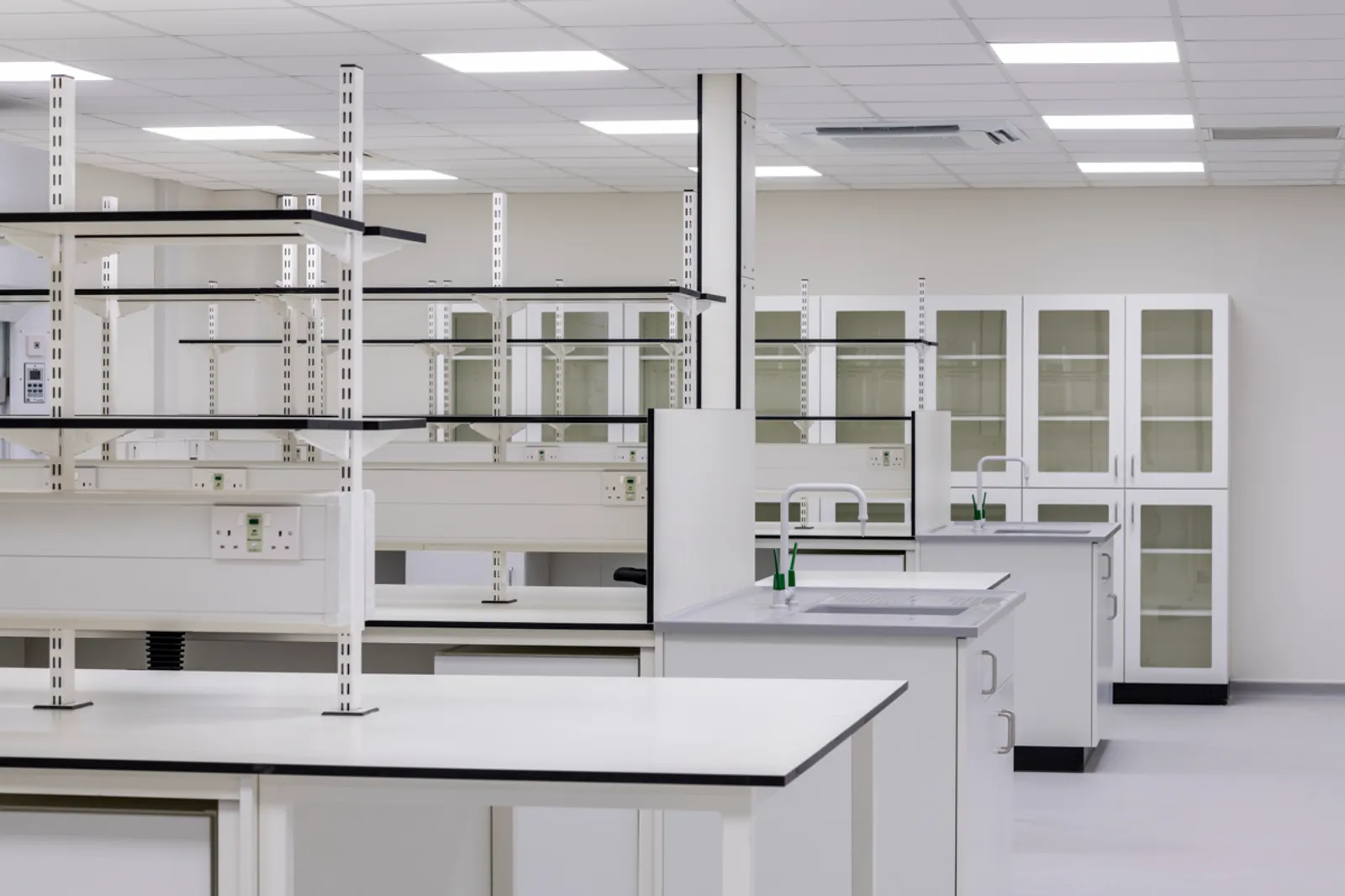
Sustainability has moved decisively from aspiration to obligation. Laboratories are among the most resource-intensive spaces in any estate, with high energy loads, intensive ventilation systems and complex waste streams.
In 2026, sustainability in lab design will be defined by:
Circular economy thinking: reuse, refurbishment and low-carbon procurement
Transparent lifecycle analysis and embodied carbon reporting
High-efficiency ventilation, heat recovery and intelligent energy management
Reductions in single-use plastics through design-led alternatives
Sustainability will no longer sit at the periphery of design decisions, it will be a central, measurable component of scientific estate planning.
6. Scientist-centred design: wellbeing, belonging and identity
Laboratories have historically prioritised function over personal experience. That is changing. With talent retention and researcher wellbeing now central organisational concerns, lab environments must reflect and support the people who use them.
This shift will bring:
Ergonomic improvements across benching, fume hood design, and microscopy stations
Quiet decompression rooms for recovery during high-cognitive work
Greater autonomy in how researchers use write-up and collaboration spaces
Integration of organisational identity and values into design choices
In 2026, the most effective laboratories will be those that feel as supportive as they are technically sophisticated.

7. Multi-sensory laboratories support focus and precision
As understanding grows around sensory ergonomics, designers are taking a more multi-dimensional approach to laboratory environments.
Expect developments in:
Acoustic zoning to balance noisy instrumentation with quiet analytical work
Vibration control for sensitive experiments
Circadian lighting to support alertness and accuracy
Material choices that reduce sensory fatigue
These details may appear subtle, but when combined, they create environments that improve concentration, accuracy and researcher comfort.
8. The laboratory as an experience: a destination for innovation
Just as workplaces have shifted towards experience-led design, laboratories are beginning to adopt similar principles. The goal is not to create hospitality-inspired laboratories, but to develop environments that attract talent, inspire creativity and reinforce scientific purpose.
We will see:
Collaborative hubs that feel welcoming and energising
Research achievements displayed as part of the space narrative
Immersive technologies such as AR/VR used for training and visualisation
Environments that communicate scientific ambition
The laboratory is becoming a place people want to be, not just a place where work happens.

9. Invisible technology: the frictionless smart lab
Technology is most effective when it quietly enhances daily operations. In 2026, smart lab systems will continue to integrate seamlessly into the built environment.
Expect to see:
Sensors embedded in ceilings, benches and service spines
Wireless power and cable-free instrument clusters
Gesture and voice controls that improve safety and hygiene
Automated scheduling and resource management tools
The aim is to create laboratories where technology removes friction instead of adding complexity.
10. Performance analytics: laboratories as measurable systems
With the rise of data-rich buildings, laboratory performance analytics are becoming more sophisticated. Organisations increasingly want to understand not just how their spaces operate, but how they support scientific output.
Performance analysis will include:
Real-time environmental and energy data
Occupancy and utilisation insights
Post-occupancy evaluation linked to researcher satisfaction
Continuous optimisation guided by digital twins
Laboratories are shifting from static environments to living, evolving systems that demonstrate their value through measurable outcomes.

Infrastructure Spotlight: the new power challenge in AI-enabled labs
As AI-driven science expands, laboratories are experiencing unprecedented increases in power demand. This shift is already placing pressure on traditional building infrastructure.
“The great power grab — as more laboratories integrate AI and data-driven R&D, including bioinformatics, power loads are increasing massively. How does the R&D process protect itself from building blackouts or a lack of dedicated UPS provision for experiments?”
– Chris Stewart, Managing Director, Area Laboratories
This issue will shape laboratory planning throughout 2026. As scientific workflows become more computationally intensive, power resilience will become a defining capability of future-ready laboratories.
Final thoughts
Laboratory design in 2026 is no longer driven by a single trend, but by integration. Technology and adaptability work in tandem; sustainability and wellbeing support each other; digital research and traditional wet science increasingly share the same space. The future laboratory must be flexible, resilient and fundamentally human-centred.
Most importantly, it must ask one essential question:
Does this environment enhance the quality, speed and experience of scientific discovery?
If the answer is yes, the laboratory is not only on trend, it is ready for the future of research.